
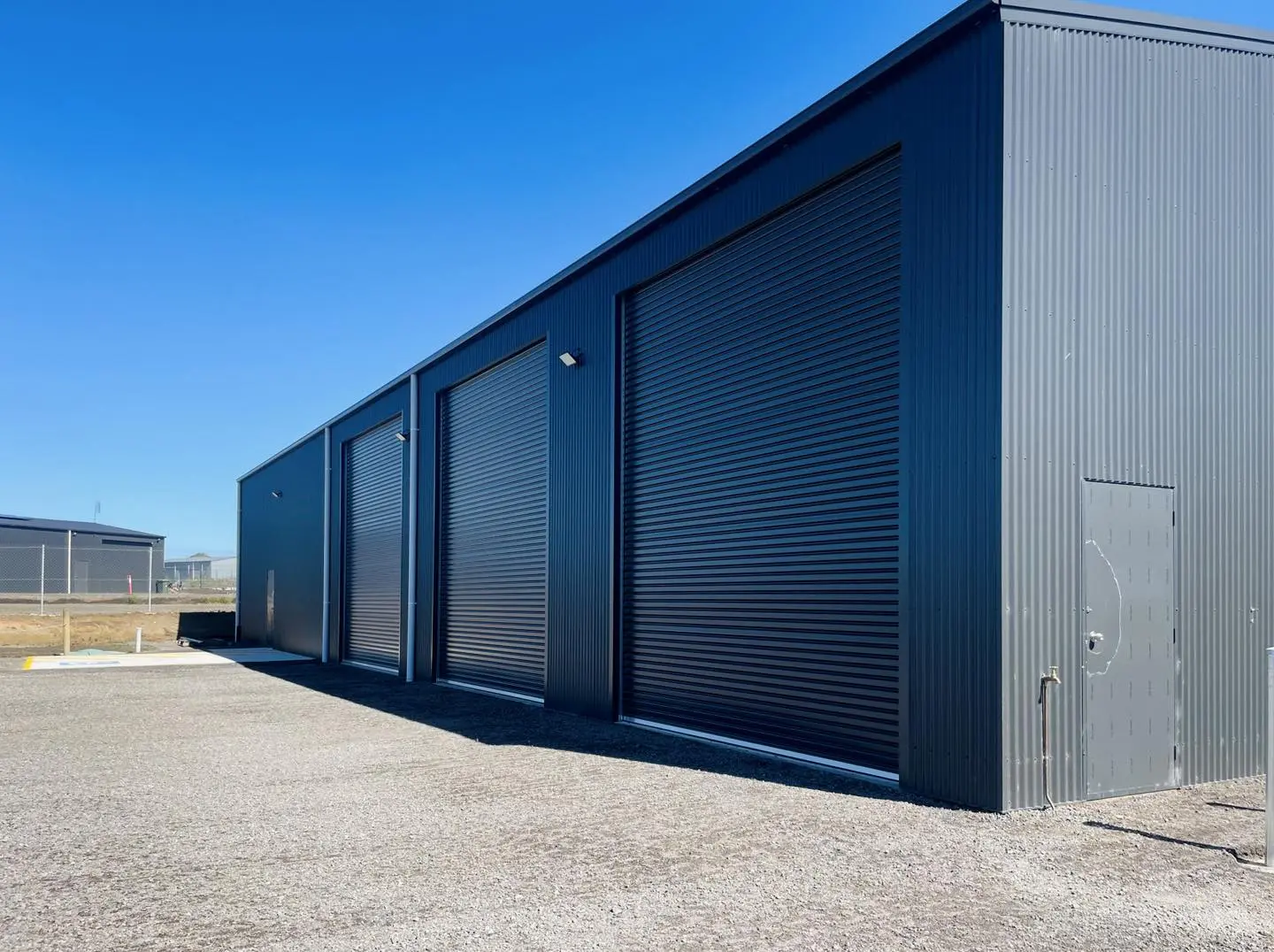
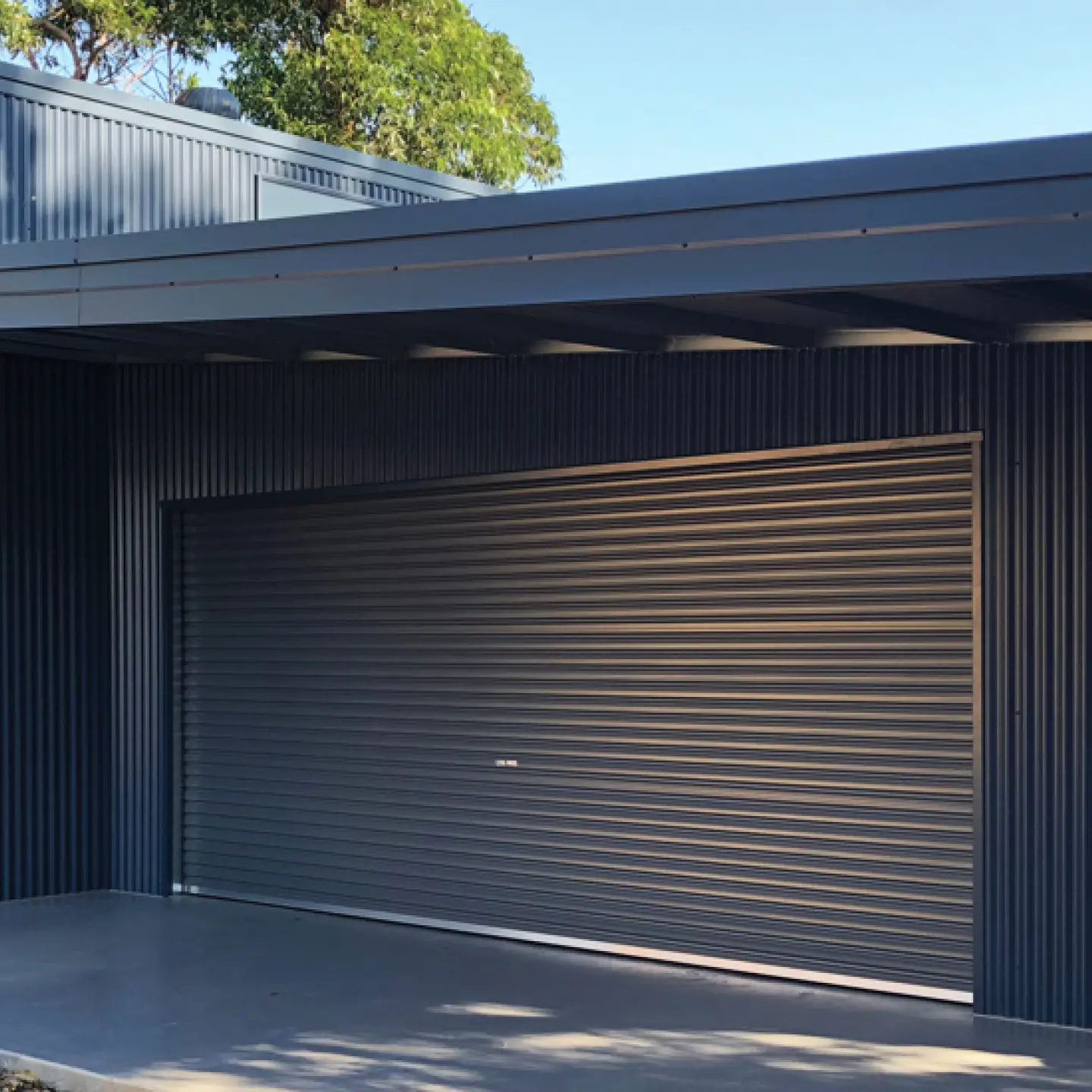
Flat roof garages use a minimal pitch design that appears level from most viewing angles while still providing adequate drainage. The low-profile roofline creates a sleek, contemporary appearance and keeps the overall building height to a minimum, which suits properties with height restrictions or modern architectural styles.
The roof actually slopes at a subtle angle (typically 1 to 3 degrees) to prevent water pooling while maintaining the flat visual profile. Fair Dinkum Builds constructs flat roof garages using Australian steel with proper drainage design engineered into the structure. You control the dimensions, door placement, and features, while we handle the engineering to ensure the minimal pitch provides reliable water management without compromising the contemporary aesthetic.
Submit a quote request and we'll discuss how a flat roof garage fits your property and vision. Or, to see what's possible first, take a look at our Shed Designer App.
Why choose a flat roof garage
Flat roof garages suit properties where you want contemporary styling, need to minimize building height, or have council restrictions that limit how tall structures can be. The low-profile design sits closer to ground level than traditional roof types with steeper pitches, which helps the garage blend into the landscape rather than dominating the property visually.
The minimal pitch design uses fewer materials than gable roofs or steeper skillion designs because the roof span doesn't need to accommodate a significant height difference from one side to the other. This can make flat roof garages cheaper to construct while still delivering a durable, functional building that handles Australian climate conditions properly.
Flat roofs also provide accessible space above for solar panels or rainwater tanks. The low, stable surface works well for mounting solar power systems without the complications of steep pitch angles, and you can position equipment on the roof without it being visible from ground level. This makes efficient use of available space without affecting the garage's appearance or requiring additional ground area.
The contemporary aesthetic suits modern properties where traditional roof styles would clash with the house architecture. The clean lines and horizontal profile complement minimalist design approaches and create visual continuity across properties with modern builds.
Customise your Flat Roof Garages
Design choices determine how your flat roof garage functions and appears. Select the profile, colours, door types, pitch angle, and extras that create the right structure for your requirements.
Choose your Profile
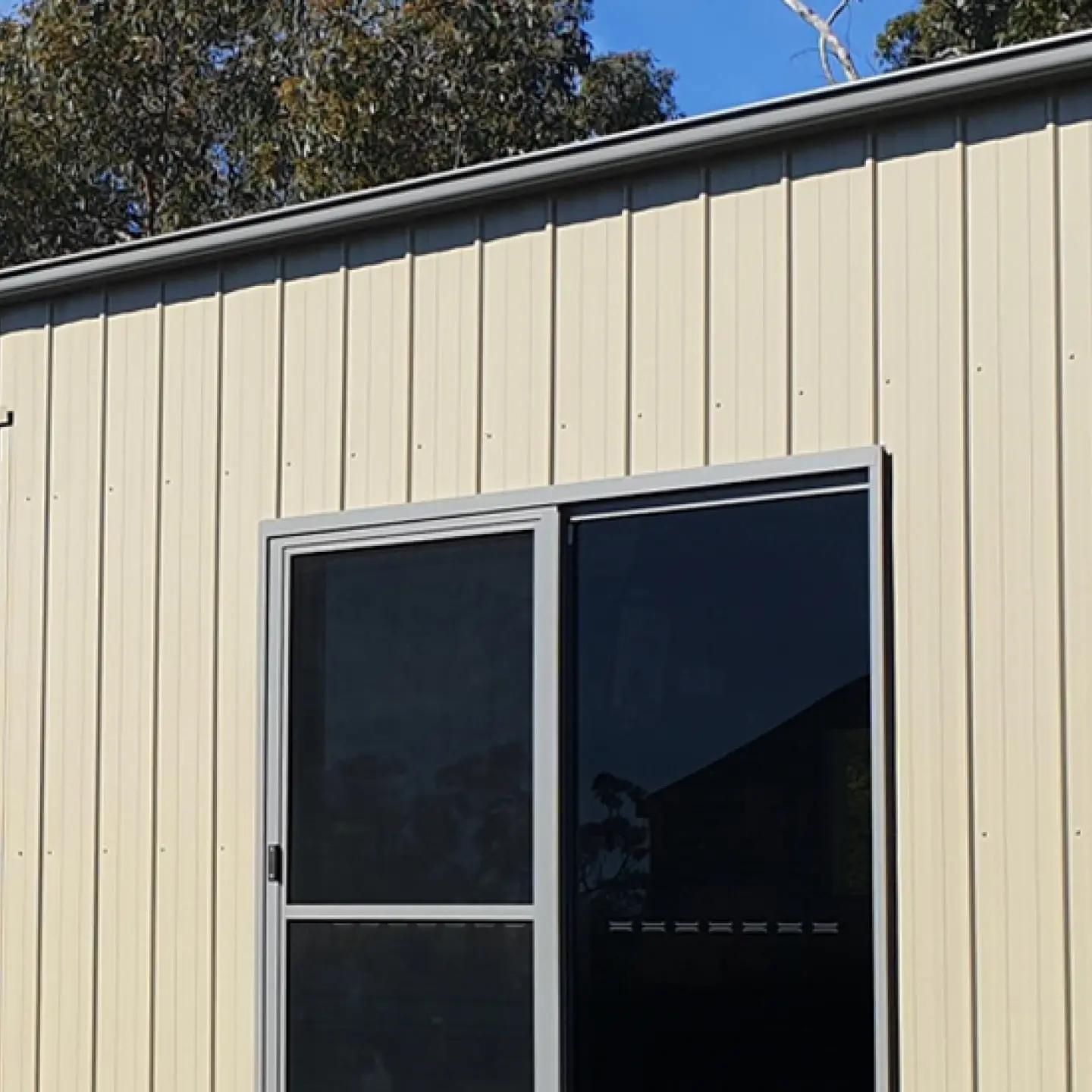
Stramit K-Panel® wall sheeting
- K-Panel® cladding is wide-covering, and perfect for smaller garages
- Its lower profile allows for smaller flashing, helpful for tighter budgets
- Its conventional fastening system makes it quick and simple to install
Stramit K-Panel® wall sheeting
- K-Panel® cladding is wide-covering, and perfect for smaller garages
- Its lower profile allows for smaller flashing, helpful for tighter budgets
- Its conventional fastening system makes it quick and simple to install
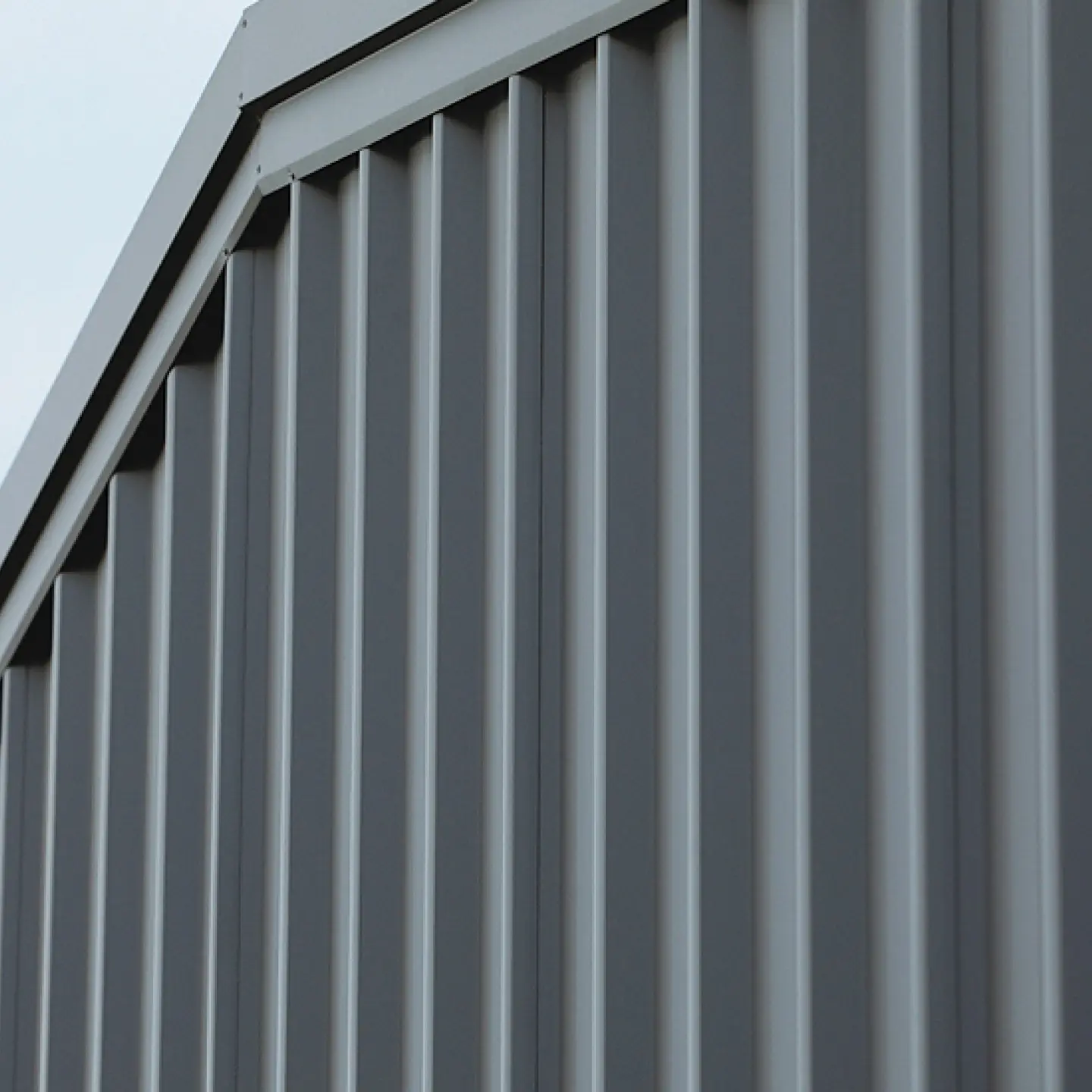
Stramit Monoclad® roof and wall cladding
- A balanced design of water-carrying capacity, wind-load performance, and simple fixing.
- Compatible Stramit Monolap lap joint system allows for single-plane, long-run roofs.
- Suitable for two-degree roof pitch minimum.
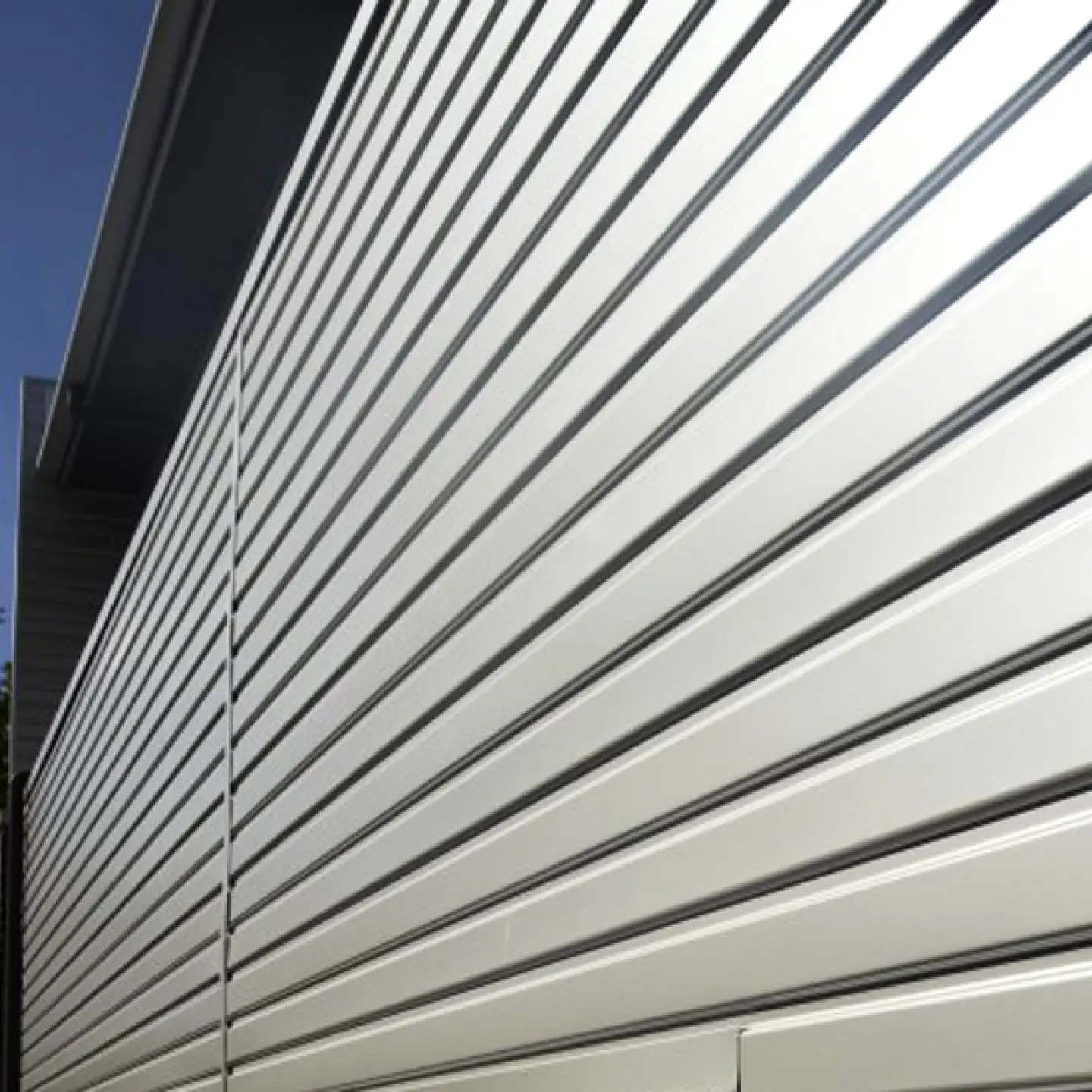
Stramit Monopanel® wall cladding
- Monopanel® cladding gives your garage’s exterior clean, fresh lines
- Available in a wide selection of COLORBOND® steel colour options
- Not available in Queensland, Northern Territory, or Western Australia.
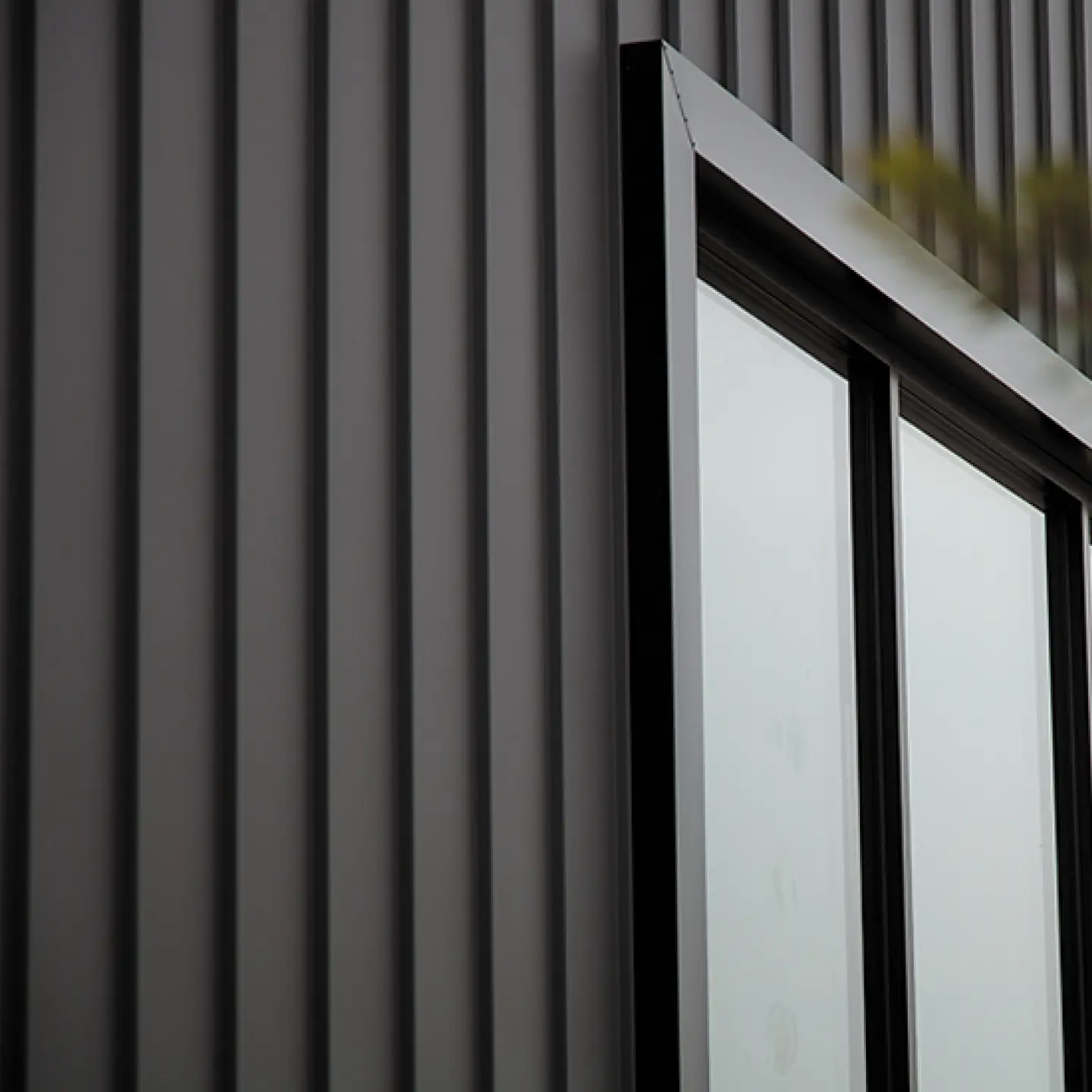
Stramit SharpLine® architectural wall cladding
- Add elegance and class to your garage through the striking look of SharpLine® cladding
- Let your architectural creativity shine through
- Attaches with direct-fix fasteners.
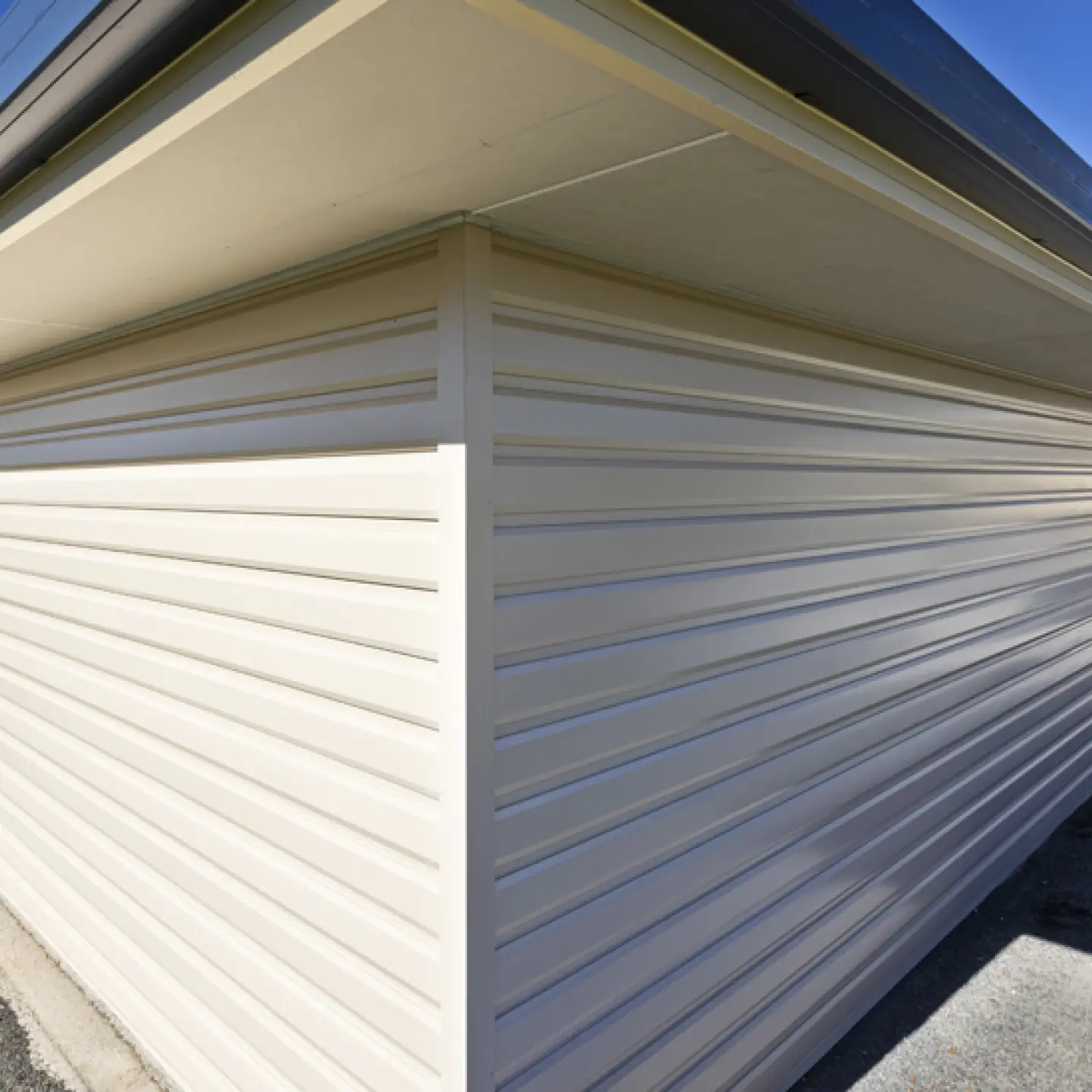
Stramit® C-Clad 280 wall sheeting
- Traditional lines and concealed fasteners
- Easy installation and cleaning
- Low profile lets you use smaller flashing
- Can be installed both horizontally and vertically
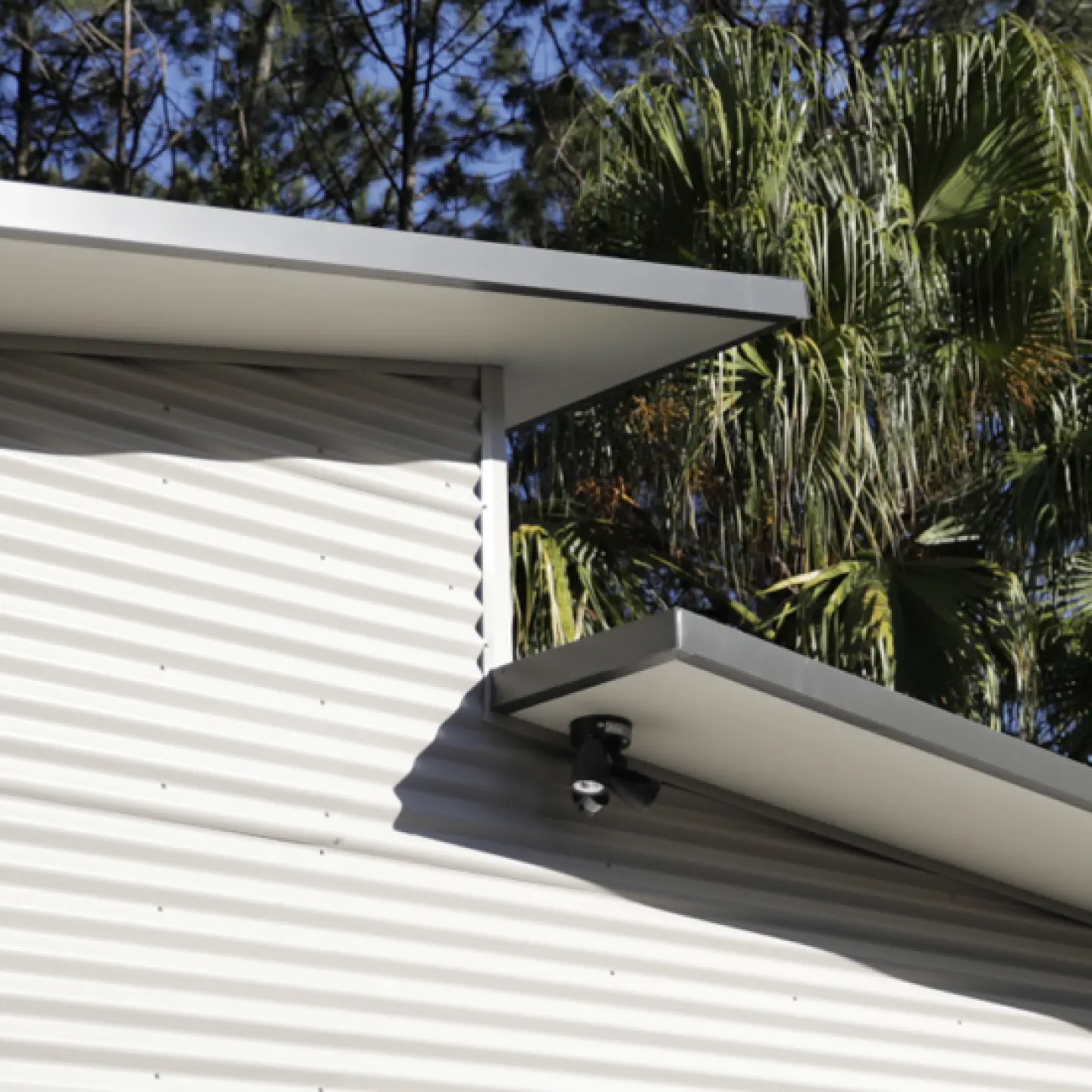
Stramit® Corrugated roof and wall cladding
- A cost-effective and reliable roof (or wall) cladding for garages
- Traditional roofing methods, enhanced by contemporary design and engineering
- Lightweight, durable and quick to set up.
Choose your Roller Doors
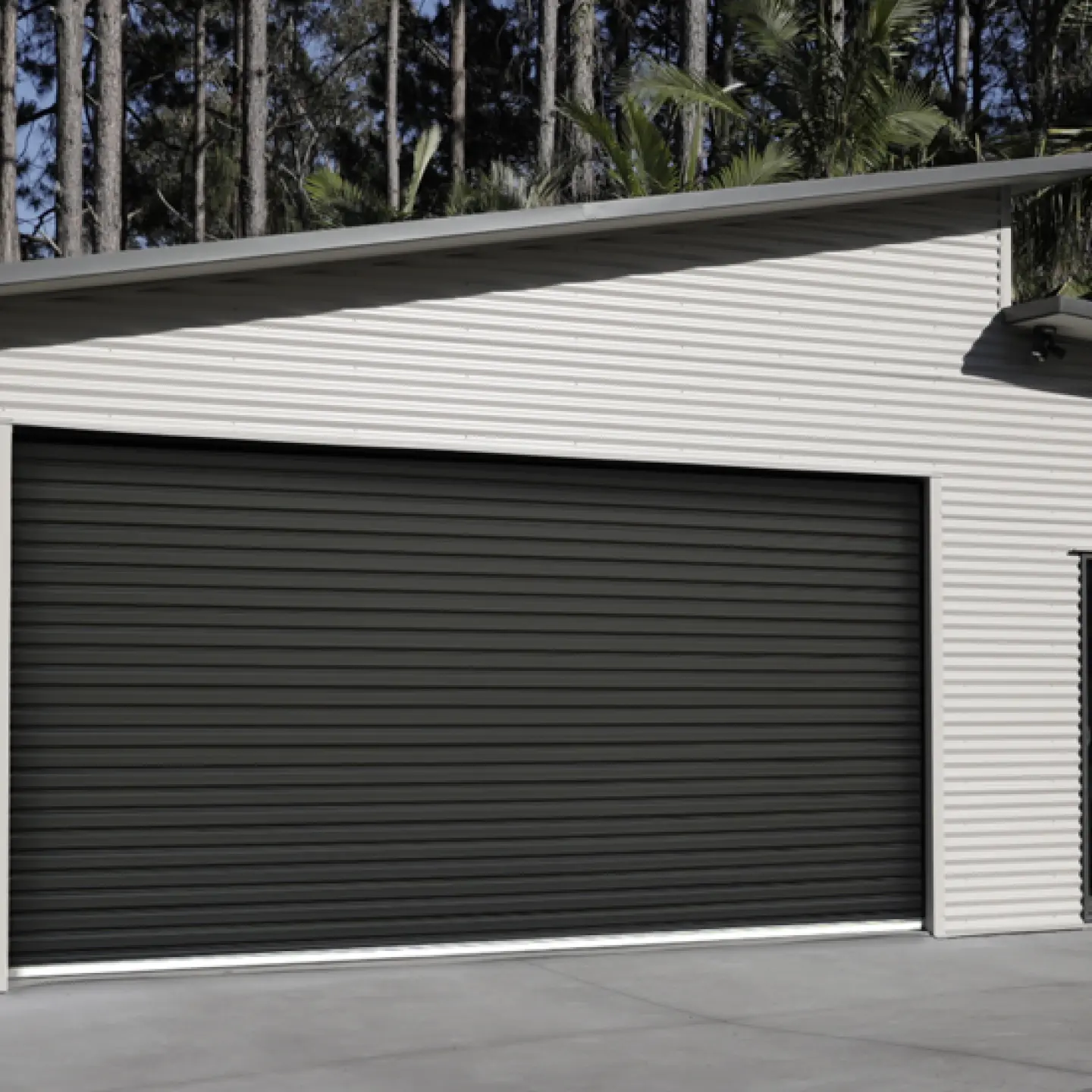
Taurean NovaTaur®
- NovaTaur® rollers are ideal for residential garages with a rounded panel and stylish appeal
- Its spring-system is tested to work to 25,000 cycles
- Its quiet and discrete operating system is perfectly suited to a residential area.
Taurean NovaTaur®
- NovaTaur® rollers are ideal for residential garages with a rounded panel and stylish appeal
- Its spring-system is tested to work to 25,000 cycles
- Its quiet and discrete operating system is perfectly suited to a residential area.
Taurean Pr1me roller door
- A general all-round performer in regards to security, strength and aesthetics
- The Pr1me shed roller doors have a stylised and refined, rounded appearance
- An excellent option for residential garages with multiple safety features and a balanced spring system tested to 25,000 cycles.
Taurean Windstrong®
- Windstrong® roller doors are engineered for optimal wind resistance
- The Windstrong® roller door’s wide-access makes it ideal for a residential setting
- These roller doors feature a built-in flexible sealing strip for dirt and debris protection.
 Our industry-leading system warranty offers you peace of mind and security. All Fair Dinkum Builds designs are engineered using our unique software solutions and backed by our technical expertise, meaning we'll guarantee they'll withstand wind conditions for 30 years.
That's over and above any materials warranty you get from our suppliers.
Our system warranty is subject to the limitations and qualifications set out in the Warranty Terms and Conditions available here.
 Our products are engineered to the highest safety standards and therefore comply with all national, state and territory building code requirements.
Our sheds are also ShedSafe accredited – an industry recognised stamp of approval, so you know that your shed will protect you, your family and your investment.
Common use cases for Flat Roof Garages
Property owners choose flat roof garages for situations where the low-profile design provides specific advantages.
Modern architectural properties: Owners of contemporary homes choose flat roof garages because the design matches modern house styles. The horizontal lines and minimal profile complement properties with flat or low-pitched roofs, creating visual consistency across the property.
Height-restricted sites: Properties with council restrictions on building height choose flat roofs because they minimize overall height while still providing adequate internal clearance for vehicles. The low profile helps stay within limits that would be difficult to meet with traditional roof types.
Solar installation projects: Property owners planning solar power systems choose flat roof garages because the roof provides an accessible, stable platform for mounting panels. The orientation and angle can be optimized during installation rather than being dictated by a steep roof pitch.
Urban infill properties: People building on smaller urban blocks choose flat roof garages because the low profile reduces visual impact on neighboring properties. The design minimizes overshadowing and maintains privacy without creating a bulky presence.
Budget-conscious builds: Property owners working within tight budgets choose flat roofs because the design uses fewer materials and involves simpler construction than steeper pitched roofs. The streamlined approach keeps costs down while still delivering a robust, functional garage.
Workshop and storage spaces: People using garages as workshops choose flat roofs because the consistent ceiling height throughout provides predictable working space without the height variations that angled roofs create. The flat profile keeps the interior straightforward and functional.
Rental property additions: Property investors adding garages to rental properties choose flat roof designs because they're cost-effective to build and provide contemporary appeal that attracts tenants, particularly younger renters who prefer modern aesthetics.
The versatility of flat roof garages means they work across different property types while delivering the specific benefits that the low-profile design provides.
Common sizes for Flat Roof Garages
Flat roof garages come in dimensions that suit your property and requirements. The roof style doesn't limit size options; flat roofs work across different spans with proper engineering.
Single garage (3m × 6m to 4m × 9m): These accommodate one vehicle with room for storage. The flat roof keeps the structure compact and low-profile, suitable for properties where visual impact needs to be minimal.
Double garage (6m × 6m to 6m × 9m): These suit two-vehicle households or provide space for one vehicle plus workshop area. Flat roofs on double garages create contemporary styling while keeping the building height manageable.
Large garage (9m × 6m and up): These accommodate multiple vehicles or substantial workspace. The flat roof design works across wider spans with proper structural support, maintaining the low profile even on larger buildings.
Custom dimensions: Your flat roof garage gets built to your specifications. Your Fair Dinkum Builds representative will work through dimensions that suit what you're storing, your property boundaries, and any council restrictions. For detailed information on sizing, our garage dimensions and sizes guide explains clearances and layout considerations.
Where we can build your Flat Roof Garages
Fair Dinkum Builds operates across Australia through local teams who handle regional requirements. Each flat roof garage is engineered for your specific location, with drainage design appropriate for local rainfall patterns and structural calculations that account for your wind region.
We construct flat roof garages in metro and regional areas, on residential blocks and urban infill sites. The building process remains consistent regardless of location: you work with a local representative who manages design, engineering, council documentation if required, and installation.
The structure is engineered to ensure the minimal pitch provides reliable drainage despite the flat appearance. Your local Fair Dinkum Builds team handles the technical details to deliver a garage that looks contemporary while performing reliably in Australian conditions.
Contact us with your property location and we'll connect you with the right team to discuss your project.
FAQs about building a garage
Council approval requirements depend on your property's location, zoning, and the size of the structure. Flat roof garages may have an advantage in areas with height restrictions because the low profile can help meet maximum height limits that other roof types would exceed.
Your Fair Dinkum Builds representative will check the specific requirements for your property and advise what approvals are needed. We prepare and submit the necessary engineering documentation and plans as part of the service. For state-specific guidance, we've detailed approval rules for garages in NSW, Queensland, Victoria, South Australia, Western Australia, and Tasmania.
Cost depends on size, the extras you include, site access, and whether you need earthworks or a concrete slab. Flat roof garages can be more economical than steeper pitched designs because they use less roofing material and involve simpler framing, though the final price still depends on your specific requirements and local conditions.
The pricing reflects the materials, engineering, and construction required for your project. Submit a quote request with your specifications and we'll provide accurate pricing based on your requirements. For context on factors that influence cost, our article on garage building costs explains the variables involved.
Flat roof garages can be fully insulated across the roof and walls. Insulation installs between the frame and sheeting during construction, reducing heat transfer and making the interior more comfortable year-round.
The flat roof design means the roof surface is more directly exposed to sun compared to pitched roofs where one side is typically shaded. This makes insulation particularly valuable for controlling interior temperature during summer. For detailed information on insulation performance, our guide to sheds with insulation explains how it affects different building types.
Despite the flat appearance, the roof has a subtle pitch (typically 1 to 3 degrees) that directs water to one side where a gutter collects and channels it through downpipes. The gutter system is engineered to handle the flow rate based on your location's rainfall patterns.
Proper drainage is critical with flat roofs because the minimal pitch means water moves more slowly than on steeper roofs. Your Fair Dinkum Builds representative will design the drainage system to handle peak rainfall and ensure water doesn't pool on the roof surface. The gutter and downpipe sizing accounts for the flow characteristics of low-pitch roofs to provide reliable water management.
A flat roof has minimal pitch (1 to 3 degrees) and appears level, while a skillion roof has a noticeable slope (typically 5 to 15 degrees) that's clearly visible. Flat roofs prioritize low building height and contemporary aesthetics, while skillion roofs provide more positive drainage and create varied internal ceiling heights.
Flat roofs suit properties where minimizing height is critical or where the contemporary appearance matters most. Skillion roofs work better when drainage needs to be particularly robust or where you want the higher ceiling on one side of the building. Your choice depends on your priorities around height restrictions, aesthetic preferences, and how you'll use the internal space.

